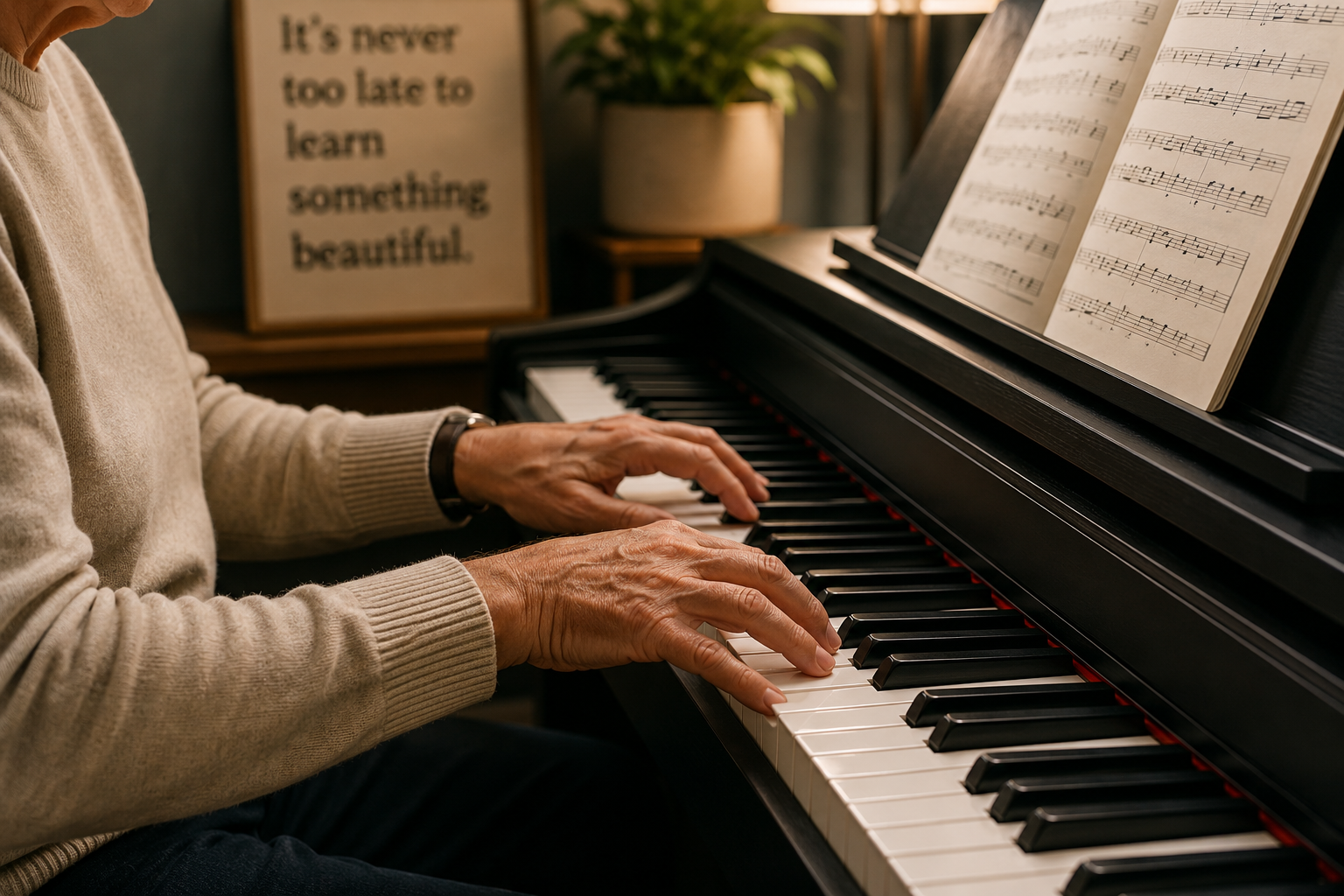
Am I Too Old to Learn Piano?
One of the most common questions I hear from adults is:
"Am I too old to learn piano?"
My answer is usually another question:
"What would you like to do at the piano?"
The truth is that age is rarely the deciding factor. Over the years, I've worked with adult beginners of all ages, including students in their seventies and one student who began lessons in her eighties. Her success had far more to do with consistency and enthusiasm than age. What really matters is having a reason to learn and the determination to begin.
Your Goals Matter More Than Your Age
Every student arrives with different goals.
Some are returning to the piano after decades away. Others have always wanted to learn but never had the opportunity. Many simply want to play for their own enjoyment, while others are looking for the satisfaction that comes from learning a new skill and accomplishing something meaningful.
Whether you'd like to play favorite songs, hymns, family sing-alongs, or music for the holidays, your goals will help shape the path forward.
Why Many People Succeed Later in Life
Determination, maturity, motivation, and a clear sense of purpose can be tremendous advantages when learning piano. Many people begin lessons knowing exactly why they want to learn and what they hope to accomplish.
The ability to make decisions about schedules, practice routines, and learning priorities also creates a greater sense of ownership in the process.
Perhaps most importantly, life experience teaches that meaningful accomplishments rarely happen overnight. Progress takes time, and steady effort produces results.
Many who begin lessons wondering if they are too old soon discover that age was never the obstacle they imagined it to be.
There Are Many Paths to Learning Piano
One of the biggest misconceptions about piano lessons is that everyone must learn the same way.
In reality, people learn differently and often have different goals.
Some enjoy a structured approach and like understanding exactly how music is written. Others are more interested in learning the songs they love as quickly as possible. Some enjoy understanding how music works, while others prefer to learn by doing.
Most people discover that their learning style is a combination of several approaches.
The important thing is not finding the "right" method. The important thing is finding an approach that keeps you engaged, motivated, and making steady progress.
For that reason, I encourage students to choose music they genuinely want to play. Whether that means hymns, favorite songs, movie themes, or holiday music, meaningful repertoire makes learning more enjoyable and rewarding.
Adults Often Progress Faster Than They Expect
One surprise I hear repeatedly from adult beginners is how quickly they begin playing recognizable songs.
Many people start lessons expecting frustration and assume progress will be slow. Instead, they often discover that they can begin making music much sooner than they imagined.
Learning piano requires patience and consistent effort, but the first successes often arrive earlier than expected. For many students, that early progress becomes a source of encouragement and motivation to continue.
It's Not About How Long You Practice
One of the biggest misconceptions about learning piano is that you need to practice for hours every day.
In reality, consistency matters far more than marathon practice sessions.
Even a modest amount of regular practice can produce excellent results over time. The key is developing good habits and making steady progress from week to week.
Learning piano is not a race. Small, consistent efforts often accomplish far more than occasional bursts of activity.
The goal is not perfection. The goal is progress.
Do I Need a Piano at Home?
If you'd like to make steady progress, having an instrument at home is important.
Today there are many excellent digital pianos available at a variety of price points. While an acoustic piano is wonderful, it is not required to begin.
In general, I recommend an instrument with 88 weighted keys. Students who practice on instruments that feel and respond like a real piano tend to have a more satisfying experience and make stronger long-term progress.
Perhaps the most surprising thing about learning piano as an adult is how quickly the question changes.
It begins with:
"Am I too old to learn?"
Before long, it becomes:
"What would I like to play next?"